BUSINESS MODELS OF ECOMMERCE
Finding a suitable match for your business model
We see and hear about eCommerce almost every day.
It’s everywhere. It’s growing!
It’s about time that we are able to buy and sell everything online. But how much is online business different from others? What are the eCommerce business models? Do online businesses work with a pattern? What business models are being followed by successful eCommerce solutions?
These are a lot of questions!
Let’s have a thorough look into the fascinating world of online business models and eCommerce solutions and try to unveil the business models of eCommerce, with all their details.
Types of eCommerce: The Dynamics of Online Business

Online and physical businesses are pretty much the same when it comes to concepts business models. The real difference surfaces when we try to implement these models in our businesses.
Here we will try to help you understand the business models along with business revenue models.
It’s not necessary to be a business owner yourself, in fact, if you have ever purchased anything from an online business; you are part of the cycle. This network involves two contributors. One is the business itself, the other is the customer that purchases from it and everything revolves around it.
We will help you understand all entities involved in business models and then explain the practical aspects of the market with business model examples.
So roughly there are 6 different types of eCommerce business models.
• B2B: Business-to-Business
• B2C: Business-to-Consumer
• C2C: Consumer-to-Consumer
• C2B: Consumer-to-Business
• G2B: Government-Business-to
• C2G: Consumer-to-Government
The majority agrees that Government or Administration falls under the Business category so let’s just call them b2b businesses and c2b businesses instead of g2b or c2g.
Here is how these works;
Ecommerce Business Model: What How & Where…
The four major business models that construct the eCommerce world are
B2C model: Business-to-Customer
This is the simplest and most common type of eCommerce model. In this method of eCommerce solutions, the dealing is between a business and a customer and it involves all types of eCommerce business. You, as a consumer, are part of the b2c model eCommerce if you buy anything online. B2c businesses vary from fashion and apparel to arts and crafts.
Quite a lot of diversity! But what makes B2c transactions easy and better than other different types of eCommerce solutions?
It’s the power to take a timely decision, the abrupt judgment a visitor makes to be a consumer when he likes something. This unique process of choice-making results in easy to do business processes.
On the contrary, the other models of business require a much longer and deep-rooted process in order to make a purchase.
This method of b2c model eCommerce deals with every type of product and as well as services. The b2c transactions are usually not of huge value and hardly repeat but this is not the case with b2b transactions which is discussed later on.
Some famous examples of b2c eCommerce solutions;
1. Amazon
2. Facebook
3. Walmart
4. Alibaba
B2B model: Business-to-Business 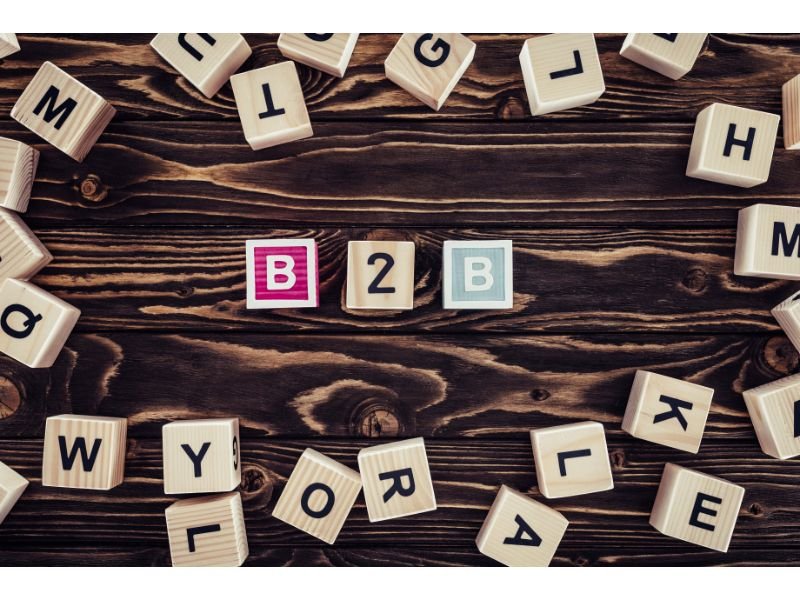
The business-to-business eCommerce solution is a type of business model that deals with two businesses. The business at the receiving end could also sell the product later on to other customers, following a b2c business model. Not all but most b2b business models are related to services such as motor factors etc.
The sales decisions and b2b transactions take time as they involved time-consuming processes. But on the other hand, the outcome of b2b transactions involves big orders and a huge amount of money (as they are between big entities) and it is a common practice to get recurring orders from the same business which helps in big b2b transactions.
In the recent past, we are witnessing a trend that involves a younger lot to be part of b2b business models.
Here are some of the famous b2b eCommerce business models, Microsoft, IBM, Oracle, etc.
C2C model: Customer-to-Customer
This business model covers the eCommerce market for consumers’ dealings. Here customers can deal with other individuals, not businesses and these individuals can provide them with services products in exchange for money. This c2c eCommerce model does not involve any major business owner. All c2c businesses have proceeded at a personal level,
with the induction of technology and everyone’s reach to social media, the trend of the c2c eCommerce business model has witnessed a hike where anyone can deal with another person via the internet, without involving anyone else.
Seeing this trend-setting its foot in the market, different forums came up with their eCommerce solutions. Examples of c2c eCommerce model
Uber, eBay, Airbnb, etc.
C2B model: Customer-to-Business
This unique solution works in an opposite manner to the b2c eCommerce business model. This involves consumers selling their products/services to different businesses.
The major example of this sort of business model is affiliate marketing. Other than that, multiple platforms offer their services where consumers can find multiple businesses suitable for the services they have to offer. The deal is done online and the consumer gets paid in exchange for services. A recent new example of these kinds of services is Instagram influencers doing promotional campaigns.
Example of c2b business model is, Upwork, Fiverr, Instagram, etc.
Government or Administration eCommerce
This type of eCommerce model deals with the government’s business dealing that is with other businesses or on a personal level. There are two business models in this regard;
B2G: This is called B2A and it deals with the types of business that have government as a client. They provide services to public administrators.
C2G: This is opposite to B2G where an individual pays to the government and gets services in return. The best example of this kind of business model is citizens paying taxes to get free education and health insurance in return.
Ecommerce Business Revenue Models: where to put your money
There are different types of eCommerce business revenue models in the market for different types of eCommerce solutions. The most important aspect of any business is its transaction handling and, in this case, it’s about online business transactions.
Let’s go through all of them one by one.
1- The wholesale business revenue model
This type of business model involves warehouse and wholesale eCommerce and which simply means a lot of money! To establish this kind of business, one needs to get a warehouse to stock goods first. The goods should be bought in bulk and all data is maintained.
All of this requires time and money and workforce (which also involves money).
2- Dropshipping
This type of eCommerce revenue business model is quite easy to handle as this doesn’t require you to get a warehouse or handle wholesale goods. The advantage you have on hand is that you don’t need to manage things on your own. You outsource everything. You get paid online and your customers get their order directly from the source, i.e., production houses.
If the product turns out to be good, it’s your success even though you are not manufacturing it. In the same way, if it’s not up to the mark, you’ll face the music.
3- Private brands
This business model means you getting a unique product idea on your own. But what you gonna do about it? You are not a business owner. You don’t have the means to manufacture it. So, get the job done with the help of contractor manufacturers. They'll help you with the production and business management in return they’ll have a share in the product success.
4- White Label
White labeling is a concept mostly practised in the beauty industry where manufacturers offer production of their successful product under their label. We see a lot of collaboration between makeup artists for their high-end products in this type of business model.
Choosing Your Business Model: A tricky trail
.jpg)
Now that we have discussed different types of eCommerce business models, b2b transactions and b2c transactions, the next phase is to analyse the use of the methods of eCommerce with respect to which model fits your idea.
There are a number of aspects to be kept in mind when deciding which eCommerce model to opt for.
The first question is,
Product
When deciding on a business model, a lot depends on the type of product you are going to sell. You can ask several questions such as;
What are you selling?
What are the prospects of the product?
How sustainable is it?
Does it have a substitute?
Customer
Another main decisive factor for a business model is your type of targeted customer. Check whether your customer is;
Already present in the market?
What are they currently buying?
What is their buying power?
Conclusion
The current times offer an ideal environment for setting up an eCommerce store based on any of these business models. All you have to do is to come up with a unique idea that works for your niche and find an amazing eCommerce platform that helps you establish and grow your business.
About the Author: Rupert Richard

With a seasoned pen and deep insights into the e-commerce realm, Rupert Richard seamlessly translates industry nuances into compelling content. Specialising in e-commerce strategies, he guides businesses toward success with a wealth of knowledge in online retail, technology, and market trends. Interested in seeing value-adding content about e-commerce? Click here to check the profound Twitter presence, where he regularly shares informative content.