HOW TO NAVIGATE THE COMPETITIVE WORLD OF FASHION ECOMMERCE AND GROW YOUR BRAND IN 2024
Despite the huge impact of COVID on global supply chains, according to data, the fashion industry is slated to reach $713 billion by next year.
There’s no question that the pandemic has accelerated fashion eCommerce trends and at present, 43% of online purchases are made by new buyers.
The question becomes: How can you set up a retail business that is fit to attract today’s digital generation?
Although, it may seem daunting, now is the perfect time to expand on great opportunities in the fashion eCommerce space. And, for existing brands, the challenge now will be to retain these customers while continuing to attract new ones by customising online marketing and shopper experience for long term growth.
In an industry that is designed by consumer desires and expectations, here are the fashion eCommerce strategies that will be the star of your poppin’ and profitable fashion eCommerce storefront:
1. Capture Fashion Visitors Via Social Media & Search Engines
According to popular myths, the phoenix always rises from the ashes. Well, in this case fashion comes alive only through incredible visuals. As an eCommerce business, you have to delight audiences both short-term and long-term.
As your business matures, your traffic trail towards scaling.
On the other hand, early stage brands achieve visibility not through boldness, instead of by investing in paid resources.
Here’s an overview of what your channel breakdown should look like:
• Organic and Direct: 20%
• Email: 10-15%
• Paid Seach & Social: 60%
• Other: 5%
The Difference Between Search Engine Optimisation vs. Search Engine Marketing
With gaining traction on social media, brands are likely to find that more people will be looking for you in other searches. This is also better known as Google’s omnichannel strategy called “messy middle”; which is a fusion of endurance and optimisation. Basically, instead of trying to create different fashion eCommerce strategies of different social platforms — win the audience by bridging them.
For you to capture the essence of all this, your organisation needs to focus on SEM and SEO.
Simply put, they both save you time and money. Through SEM you can drive your search rankings by utilising Google Shopping ads. Which is perfect for the larger DTC (Direct to Consumer) labels that have the means for hefty ad spending. Did you know two-thirds of PPC clicks are made through product listing ads (PLA) on Google
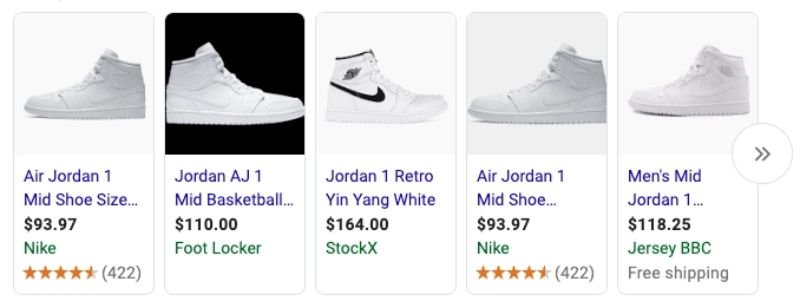
An example of a Google Shopping Ad
However, SEO is ideal for growing DTC brands that don’t necessarily have a steady flow of money to drive eCommerce rankings. User-generated content customised through SEO is the organic route to support your organic search visibility.
And, remember: You need to meet the demands of the consumers and keep up with your competitors through personalized campaigns.
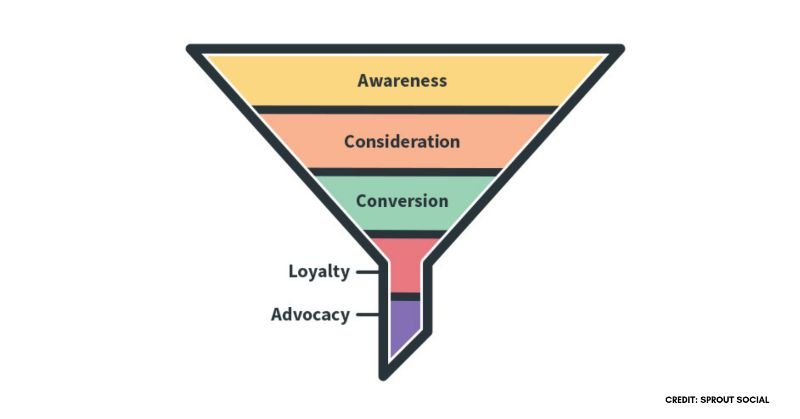
2. Increased Profitability Through Optimised Fashion Marketing Funnels
source
(a) Think about how you can convince people to revisit your pages
(b) In doing so you will be collecting valuable metrics through your conversion methods
(c) Your goal is to make a sale.
Create a website, that will drive visitors to hang around on your site for more than just a couple of seconds.
With that cat out the box, what are ways that will convert traffic into revenue worthy transactions?
Improve Mobile Usability
More than 70% of consumers say site speed matters when it comes down to buying from specific brand. You’ll see more than half of mobile users disappear if your site’s load time exceeds more than three seconds.
That’s not even the worst part.
According to fashion eCommerce trends, consumers are more likely to head to another competitor if they have trouble opening your eCommerce site on their trusted mobile devices.
Well, that’s all because mobile retail accounts for 72.9% of eCommerce sales worldwide in 2021. Hence, that barely leaves fashion retailers with zero room for error.
In baseball lingo, three strikes and you’re out!
Start by modifying minor tweaks:
• Display catchy headlines
• Anchor CTAs
• Light-weight visuals
Improve Checkout Experiences
Do you know the feeling of walking into an Urban Outfitters store? It’s a total vibe!
Thus it has become crucial to adjust your store’s browsing and checkout experiences.
For example, integrate awesome onsite search tools that open up with a demographic filter, then suggest products according to the customer’s preferences.
Include these 3 tips in your cart-to-checkout process:
1. Send customers notifications when they hit the free-shipping mark
2. Display express payment options that are mobile-friendly
3. Which is complete with dropdown options to purchase now or later
Vertical Growth
2021 of all years is critical in the B2C eCommerce vertical growth. According to fashion eCommerce statistics, it will climb up to $900 billion in the coming years. All because the Coronavirus pandemic has shifted trends within the eCommerce segment that are changing the growth patterns of popular verticals.
Bags and accessories are important revenue-generating verticals.
Digging into the number, a US-based vertical examination revealed that these luxury products have taken the brunt of the fluctuating markets...• Accessories: -12.69%
• Luxury: -11.11%
• Footwear: -5.54%
• Eyewear: -4.9%
• Apparel: -2.88%
Firstly, there’s only a small community of people that indulge in bags and accessories, but that’s quickly changing. Those two subcategories are not parallel to market saturation when compared to apparel. However, more customers are willing to spend on them. And the gap will only widen in the future.
On the bright side, the CGARs for the next five years are predicted to be steady for most fashion subcategories.
In 2021, we’ve seen some outliers stand out.
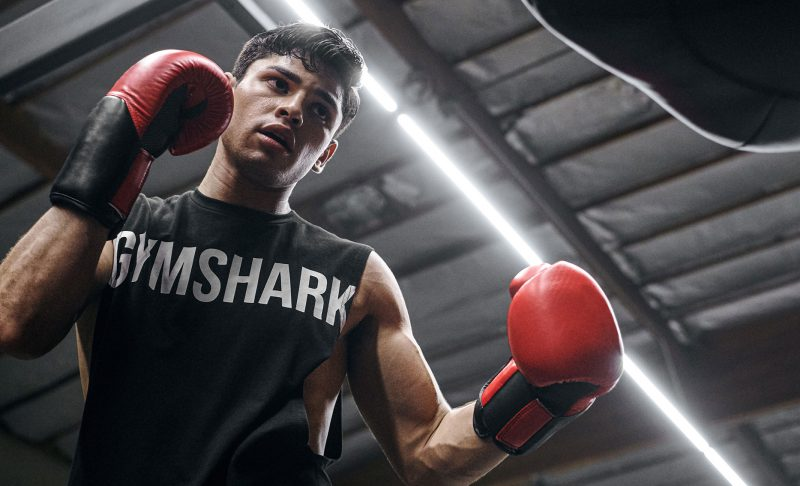
Of course, as people around the globe were glued to their sofas due to on and off lockdowns, athleisure made a huge splash in the fashion landscape. Among the anchoring companies, Gymshark was perhaps the real winner.
On-Site Personalisation = Yes, Please!
Omnichannel marketing has become an integral part of personalised experiences, though. Somewhat of a necessity. It’s a fashion eCommerce trend that has been around forever, but since then it has spanned to create memorable shopper journeys.
Personalised content boasts higher conversation rates. It’s bridging the gap between high fashion and premium labels.
Put simply, through multi-channel eCommerce retail businesses you can build on brand loyalty through personalised content on digital spaces:
• Website: Showcase products that are most viewed by your customers. By tracking past purchase histories, brands can recommend items that are relevant to the individual shopper.
• Automated Workflows: Analyse the data through customer logins and browsing records to send personalised recommendations through email and SMS format.
• Email/Phone: Popups on your websites are customisable so that you can feature images that pertain to what the customer is currently viewing.
Make a Statement With Inclusivity
In 2021, people are looking for transparency. Younger audiences yearn for an optimistic portrayal of equality and equity from the brands they consume. And only the brands that give precedence to inclusive causes will in return drive deeper connections with buyers. Even though the conservatives would like to raise an argument, inevitably authenticity always wins.
Instilling values (i.e. tone, representation, appropriation) of diversity and inclusivity are crucial for securing a brand’s credibility. They reflect the ideals of the present day modern society, elevating voices of people that have traditionally been underrepresented.
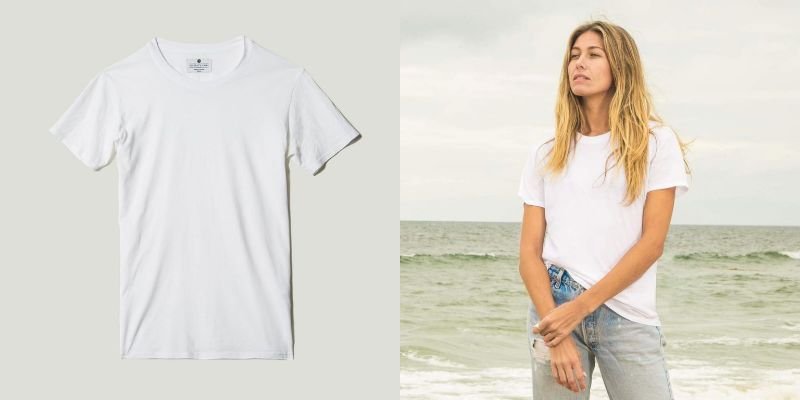
The Classic T-Shirt Company – an inclusive brand that's making a difference in ethical and sustainable fashion
“Consumer demand can revolutionise the way fashion works as an industry. If everyone started to question the way we consume, we would see a radically different fashion paradigm.”
Fashion Revolution
Since eCommerce is the fastest-growing channel, retailers need to stand out. The only way that can be done successfully by offering customers the best experience possible. As the fashion eCommerce trends is getting harder to keep up with, fashion retailers need to map out a customer-service-focused journey, that will withstand global expansion.
Moving forward, quickly emerging regions in the fashion e-commerce market will be the Middle East and South America, where growth Compound Annual Growth Rate (CAGR) is predicted to be at 16.7% and 15.7% between 2020-2025.
Although, geographically, the consumption tilt is anchored towards China; accumulated $284.3B in 2020 sales surpassing these next four countries combined:
• United States: $126.5B
• United Kingdom: $32.5B
• Japan: $23.9B
• Germany: $22.5B
What can we expect from our largest eCommerce global markets?
Fashion industry statistics show that China and the US will drive 55% growth in eCommerce prospects. From a numbers POV, an emerging region such as Latin America saw an increased eCommerce percentage as the pandemic pushed buyers to shop online to get essentials.Weigh Your Options
There is no one “Golden Rule” to start your online business. Building a loyal community of fans and followers requires you to arm your brand with the necessary skills that will work out in the long run.Now, is the best time to set up an online business and capitalise on the ongoing momentum. As consumers are tapping into apps or eCommerce sites to obtain valuable product information, the above trends will heavily influence the customer decision-making process in 2021.
Get in touch today to find out how we can put these eCommerce growth formulas to work for your fashion business.
About the Author: Frederick Rupert

Frederick Rupert is renowned for his profound expertise in e-commerce. The writer navigates the dynamic landscape of online businesses, offering strategic insights that drive success and growth. Want amazing tips on how to grow your e-commerce business? Visit his Twitter account to have in-depth knowledge of the industry.