A 2024 GUIDELINE ON HOW TO START AN ONLINE BUSINESS
Starting an online eCommerce business from scratch!
Chapter 1: A beginner’s guide
If you have searched for “how to start an eCommerce business” and started looking for different types of eCommerce solutions then you are possibly interested in buying and selling online and wondering what and how to sell online.
Welcome and well done for making a smart choice.
How? You ask
This blog is going to help you to be one of the potential eCommerce businesses that can be part of the immense 265% growth of online selling sites in 2021.
There is another possibility. You have a brick-and-mortar store and now you are looking for an online selling platform to build a b2c or b2b eCommerce software solution for you.
Well, this is gonna work for you too. Go to Chapter 5 to see the details.
So, let’s just start our beginners guide for eCommerce start-up and walk you through step-by-step about how to sell online.
E-commerce for dummies
This guide will provide you with all the necessary information you need to have for an eCommerce business and definitely some more...
What is eCommerce?
.jpg)
To put it in clear words, eCommerce is just like any other business with a physical structure except it works completely online. Simple right?
All you need is to get an online store and you are good to go. Start selling online in the UK and worldwide with your eCommerce store.
Why eCommerce?
Setting up an online store is so much more feasible than having a brick-and-mortar store.
Besides, the cost of building a physical store is certainly more and so is the price of maintaining it as compared to an eCommerce site. So, if you are wondering why and how to build an eCommerce website from scratch, keep reading.

How to do eCommerce?
For setting up an online business, you need a few things such as,
• A product to sell
• A business plan to execute
• A website to build an online store
• A strategy for marketing

When to build an eCommerce store?
The best time for you to start an online business is, right now!
The last few years have seen an unprecedented hike in the numbers of online businesses and profit generated by the eCommerce industry. The COVID-19 pandemic has also immensely changed the shopping behaviours of consumers and thus the traditional retail businesses have been affected.
The only way forward is an online business.

Where to build an eCommerce store?
In order to succeed as an online selling platform, you need a strong foundation. Your business face, a website!
Which in this case will be provided by a user-friendly and attractive eCommerce web design from an expert eCommerce solution provider.
Types of eCommerce
Now that we have established what is eCommerce; the next step is choosing the right category of eCommerce for your business. Confused about what to pick?
Let's make it simple for you.
B2B - Business to Business
An eCommerce platform for different companies to buy and sell online by providing services or products to other businesses.
C2C - Customer to Customer
Providing a platform for customers to trade which each other, is C2C eCommerce.
B2C - Business to Customer
The most common type of eCommerce is B2C which is simply just a company selling to domestic customers.
|
B2B |
C2C |
B2C |
|
Microsoft |
E-bay |
Amazon |
|
eWorldTrade |
Uber |
|
|
Oracle |
Airbnb |
Spotify |
Read more: Business models of eCommerce
Future is eCommerce
The future is digital!
With the changing times, the modes of business are also changing. If we look at stats and figures from the last few years, we see that the online market for selling and buying in the UK is far more advance and growing compared to the rest of Europe.
According to Statista, only in 2019, the total value of online retail was 76.04b GBP. Online share for retail sales amount to 19% and the expected growth rate in 2023 is over now 34.5%. 2020 pandemic and lockdown has turned the luxury of online shopping into an essential and the numbers went up even further.
.jpg)
Chapter 2: Choose your niche
If you are planning to start an online business, you need an eCommerce business idea for this.
The first step in setting up an online business is similar to the first step in building a brick-and-mortar store. You need a product to sell!
Here are a couple of options for the eCommerce business.
Digital vs Physical
Physical products are actually the everyday products that we see in markets. The same fashion and apparel, sports and fitness, arts and crafts items that are sold in the shops can also become your eCommerce business. All you need is a comprehensive business strategy and a website; we will get to both of them later in this blog.
Why choose a physical product?
-It's tangible
-Easy to market
-You can easily create a unique product
Digital products are somehow a complete online phenomenon. We got eBooks, software solutions, and multiple other online services in this category. You need an online eCommerce platform to sell these.
Why choose a digital product?
-No shipping cost
-No need for a storage place
-Less financial risk
Find your niche
What will I sell online?
Find an amazing idea of a unique or in-demand product that you can sell. For this, you need to make sure that there is a market for your product and then you can target that niche to sell your product.
After forming an eCommerce idea to sell, you need to work on the second step that is the feasibility study.
How I’m gonna make a profit?
This step of online business is also similar to regular business. A feasibility study is an essential requirement for establishing any business. This gives you a complete picture of how much your product is going to cost you and what will you get in return after the sale.
How will I keep up?
Okay let’s say you have created a product and it is doing well on paper in your feasibility report, then how will you maintain the pace and develop your business?
You need a solid production mechanism as well. So, before launching your product online, make sure that you have finalised your production structure and the supply chain. This beforehand planning is going to save you a lot of trouble later, when your product is successful in the market and is in huge demand (fingers crossed!).
These processes are going to help you start an eCommerce business and a solid product that is going to last in the market against its competitors.
While structuring a business plan for your eCommerce, keep in mind that your battleground is online and you have to take this into account in the formation of any of your strategies.
This sets us in the next phase of online business planning which is regarding official paperwork.
Chapter 3: Make it official
You got yourself a wonderful eCommerce idea that is going to make a good sustainable profit for you. What next?
Just make it official. Get all the legal work done and give your business a brand name.
We will explain, How and Why.
Legal work
We are still in the initial stages of your online business launch so most steps are similar to any physical business. Before you launch your product, you need complete paperwork that includes getting a licence and permit for your business.
Register your name
Now before setting up an online business, let’s just get your company name registered and you are now legally the owner of the brand name.
There are few things that you need to keep into account while naming your brand
• Keep it simple and short
• Should be unique
• Get a catchy name
• Value feedback
• Look for domain availability
This process will be discussed in detail later.
Business license
The next legal requirement is getting a business or trade license. This step is optional and highly depends on the nature of your business. You need to get a professional license if you are
• A legal consultant
• A medical expert
• A childcare professional
• An insurance agent
• An architect
• A finance advisor
• A real estate agent
Other permits
An occupation permit allows you to work from home.
A health certificate is a legal requirement in case your eCommerce business is related to selling food items or cooking materials.
Tax requirements should be fulfilled by doing sales tax paperwork.
Copyrights and other digital laws needed to be obeyed as per your local legal procedures.
Chapter 4: End product
Until now you have chosen your
I. Business eCommerce category
ii. Type of product you want to sell
iii. The niche you want to target
iv. A company name for your business
v. Your legal work is completed
So, what next?
It’s time to finalise your product.
You got a product to sell!
This step involves giving some final touches to your product before you set in the world of the online market. The product analysis in this stage will help refine your strategy even more and lower your risks.
Market analysis
Do your research work regarding your target market
Get to know what sells in bigger numbers and what should be your strategy to make your product a hot selling item. This may require some changes in your initial plan but this change is for the better.
Example1: you planned to sell sports goods but market analysis shows a great demand for fitness goods. You can choose a product that has more demand after complete market analysis.
Example2: You see a hike in the demand for facemasks these days. You start working on a business plan for an online store selling facemasks. But if you do the target market analysis, you might see that this is not a sustainable business in the long term. We’ll be soon over this pandemic (there is no harm in being optimistic guys!) then your large stock of COVID-19 essentials will be of no use since this is a temporary need.
So, if you looking for a career out of eCommerce solutions, go for something ever-green and long-term.
Price the product
Be practical about your profit aspiration. Do some study on your competitors, understand the demand and supply mechanism. You should be able to make a good profit but not at cost of business downfall in the longer run.
So, be smart about how much your product should be priced.
Example 1: You have launched a new product in the market. You are charging too much but you also have a good marketing strategy, so the product is in demand at the start. Later another company launches the same product at a lower price and better quality.
You won’t be seeing those £ £ anymore! Since your strategy was not long-term.
Example 2: You launch a good product in the market but you price it lower to compete with others. It’s going to be in demand for some time of course, but if you are not making enough money to enhance or sustain your business, then the business will not be sustainable for long.
A bit of pickle innit?
Break-even
Determine what will be your profit by subtracting your expense from sales. You need to know what will be you earning after paying all bills. When you come to a point where you can cover fixed expenses from your earnings, you’ve reached the break-even point.
All remaining income is your profit.
Future
The future of eCommerce is bright but is it for everyone?
Many businesses are failing every day. Why?
Rather than just looking at popular market trends and starting the sale of a product that is in demand right now, the entrepreneur in you should look beyond temporary factors and go for a more scalable and profitable product that benefits you in years to come.
Having said that, the contemporary dynamics do influence the trade and businesses all-around world and should be included in your business plan in one way or another.
Bottom line? Have a future-oriented strategy with the modern trend in the account, as keeping things in balance is the winners’ trait.
Chapter 5: E-commerce Business Plan

Do you feel ready to set up an online business? We’re almost there!
Starting an online business is a big step, which requires a lot of hard work, plenty of planning, a big chunk of courage, and a hint of risk of course.
No matter if, you are working on an eCommerce start-up of your existing brick-and-mortar business or you are thinking of how to start an online business from scratch; this eCommerce business plan is necessary for all of you.
This pre-launch planning phase will save you from lots of trouble later on. Trust me.
More businesses turn out to be a failure than success
If having an online business is such an easy task and the profit is so decent then you might wonder, what’s the catch here?
The majority of businesses die down in the first few years of their launch.
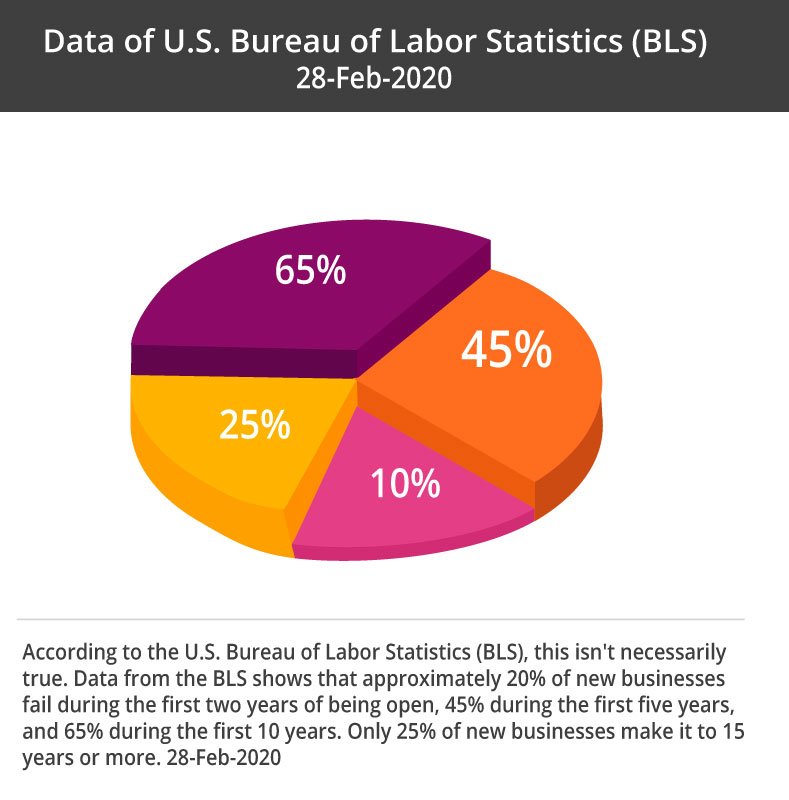
Scary right? Let’s turn this fear of yours into excitement.
If we investigate these case studies, the overwhelming reason behind this misadventure is the lack of an eCommerce business plan.
So, thanks to your lucky stars, you are in safe hands as by the end of this guide not only you will be able to craft a handy business plan but also have all the critical material vis-à-vis all steps of starting an online eCommerce business.
Before learning how to write a business plan, let’s discuss that;
Why spend time on a business plan for an online store?
- You will get to know what your business needs are
- You will understand your product better
- Get to know your targeted customers
- You can plan out finances better
- Get to know what resources you need
- Plan your future goals
Now that you know how critical it is to have a business plan, let’s dig into it and teach you how to write a business plan.
E-Commerce business plan
By now you know what will be you selling online with your eCommerce solution, so we will just go through this planning part step by step.
This works for any kind of product you are about to sell online.
Refine Your Product
- Estee Lauder Founder, Estee Lauder
For writing a plan for an online business, you need to become your biggest critic and strongest supporter. Ask yourself questions repeatedly, then challenge your ideas and keep working on your plans. The more you put in research the more you will benefit from the results.
Complete your product structure and then put everything in document form.
You need to work on the following details
- Finalise your business type; b2c or b2b eCommerce solutions
- Your product source; Drop shipping or Others
- Get to know your audience; Local or Global
- Conclude your payment options; select multiple payment gateways
You need to provide some of this information to your customers as well, once your website is up. They need to know your shipping options and payment ways. So, sort this out thoroughly in the planning phase.
Your Company Is Your Brand
- Jeff Bezos, Amazon
You need to finalise some key things in this phase before launching
- What product variants will you offer
- Get a good domain name, that works for your brand
- Hire all core members of your company
- Make them part of your mission by incorporating their opinion
- Fix your future goals
Include some of this information on your website later on. Visitors would love to read what your mission is and how are you planning the future, and what’s new coming for them.
Customer Is Key to Success
- Jonathan Midenhall, Airbnb
Learn about your customers; read about your customers, it’s all about them!
Provide them with what they want and you are good to go. This step is just about analysing your customer needs and behaviours. For this, you need to know which demographics you are targeting.
Learn about your targeted customers
- Gender and age group
- Their psyche
- Their needs
- What are they already getting
- How are they responding
- What is lacking
- What can you provide
SWOT analysis
“Always deliver more than expected.”
- Larry Page, Google
You need to conduct a SWOT analysis. If you know what you have to offer, you can market it duly.
Strength is what makes you unique or better at a job than others. Maybe you are offering them what others don’t, or you could be selling something of better quality and lower price from competitors. This is your strength, utilise it.
Weakness could be any of your business shortcomings. These things should be in discussion and part of your eCommerce business plan. You can always work on it, to make your business grow with time and resources.
Opportunities should also be part of your analysis. You need to know what the market is offering you as a new business owner.
Threats are part of every business venture. You should know what you are getting yourself into and how to overcome those.
Research Your Competitors
“Innovation distinguishes between a leader and a follower”
- Steve Jobs
A simple way to be the best at what you do is to learn from mistakes, and in this case, learn from others’ mistakes. Before you set up online business, read about the eCommerce target market for start-ups.
Observe what other online selling platforms do, how do they sell online, what makes them a success or a failure, and then do this even better than them by conducting a target market analysis.
With your eCommerce solution, give your customers something they do not find anywhere else.
Manage your Money
You need money to run a business and you need planning to manage that money.
When establishing your business plan, you need to sort out your finances too. The first question that arises is; How are you going to get money for your eCommerce business?
You need money to start the business and you also need money to sustain that business. There are several ways to attain your target money; let’s discuss.
1- Self-finance: This comes with a risk of losing your savings but with the obvious perk of debt-free business.
2- Personal loan: If you don’t have the amount you need for starting an eCommerce business, then you can ask for a loan from any friend or your family. They might lend you money without harsh conditions.
3- Go for LOC: business lines of credit allow you to get a loan for short term needs.
4- Business card: Use a business credit card as we use a personal credit card.
5- Get a grant: Go for a grant if you think you will be unable to pay the debt.
You got the money; now what? You need to build a feasibility plan and work thoroughly on how to use this money. Here is how you can work on your plan by analysing it completely and keep your finances in check.

Financial plan
Make a financial plan according to your specific business needs.is your plan good enough for investors to get convinced?
Secondly, be realistic in your goals and ambitions. Staying positive and hopeful for success is necessary but so is the need for realising the situation honestly. Following are three requirements that you must fulfil to stay in the right lane, finances wise.
1- Revenue:
Get a complete analysis of your income statement. This includes your expenditure cost, all your income for a specific period of time.
This will help you figure out your expected profit or loss ratio.
2- Balance sheet:
This will help you list all your liabilities and assets. You can figure out your business equity in this way.
3- Cash flow:
List down your incoming and outgoing cash with respect to real-time. You need a check and balance for positive and negative cash flow.
Readmore: How to write a perfect eCommerce business plan
Chapter 6: Name it, brand it

“Products are made in a factory but brands are created in the mind.”
- Walter Landor
Name your product
Start with a brand name. You need a name that will have to work as your brand ambassador, so make it marketable!
Here is how you do it,
Test of time: Is your brand name going to stay relevant in the future? Keep this aspect in your mind while finalising your brand name.
Unique is better: The more distinctive it is, the better.
Simple is long-lasting: The more you keep it easy the more it will be accessible to the masses. The name should be easy to use and pronounce if you want to make it popular.
Name with a message: The name should convey the purpose and other characteristics of the product and should be easy to brand without explanation.
Your brand should be able to provide answers to some questions,
Why?
What is the purpose of your product and what problems does it solve?
How?
How is your product going to compete with others? What does it offer?
Where?
Where do see yourself in the future? How will you go from here?
Now when you are about to name your product, you have a few options to choose from,
1. Some acronym
2. Named after you
3. Keep it descriptive
4. Make it unique
5. Misspell names
6. Real words
After all the planning phase of your business, you need a solid foundation, a base of your brand. This face will be provided to you by a website.
Chapter 7: Online footprint
Now let’s get you started with your business website.
With everything else sorted out on the back end, the entity which is going to represent your business to your customers is; your website.
It is going to work as a tool to not only deliver your business objectives for you but also as your business face for those who want to get in touch with you. So, this puts the onus of business representation entirely on your website.

Getting an eCommerce website
Are you up for the challenge?
The next step in the guide for eCommerce dummies is to build a wonderful website for your amazing business so let’s just get started.
How to decide on your domain name?
Your domain name matters. But why?
1. It’s part of your URL
2. You have to promote your business with it.
3. It’s going to represent you everywhere!
4. It can improve your visibility
5. It can make your business credible
6. Can get you more web traffic
Okay, we get it, it's crucial. But what are the decisive factors to keep in mind to name your domain?
1. It should be descriptive
2. Keep it short
3. Should be precise and meaningful
4. Make it easy to remember
5. Avoid using numbers
6. Keep it clear to avoid confusion
How to choose your web host?
You need a web host to publish your website and you have to make some further decisions regarding it.What choices do we have here?
1. A shared web host
2. A dedicated web host
How does this work?
A shared web host is cost-effective but you have to share it with other websites which can affect your speed negatively.
A dedicated web host means you get to have your own server which means no competition for space and speed with others but this costs much more as compared to a shared web host.
It’s a trade-off, which you have to do depending on your budget and business requirement, so we leave this up to you.
How to create your business website?
Here comes the billion-pound question, what is a good website?
We are going to list down each and every feature of a successful eCommerce website and make it easy for you to take the decision.
• Go for a trendy website design
• Choose an attractive user interface
• Ensure that the website is mobile responsive
• Security to build trust
• Multiple payment options
• Add reviews
• Give a feeling of a personalised service
• It should look professional
• Make it vibrant and simple
• Include good quality images
• Make it easy to navigate
Look for an eCommerce services provider, who is going to provide you with a comprehensive eCommerce solution at an affordable price.
Your website is not only your online store; it is your brand. You have to sell your brand, so make it look attractive in all aspects. The more sellable you make your product; the more profit you are going to make.
But how to do branding?
Let your eCommerce business be a brand
Your website is not just an interface or Home page.
It is a collection of different pages, which all cater to the different needs of the consumers concerning the said business. Your job is to make them interesting individually and sell the brand as a whole.
Here is what needed to be done;
About us: You need to provide as much information about your business as you can. When customers get to know about your company and workforce, it adds a humane angle into the work relation, which eventually helps you as a business. So, work on this page strategically.
Contact us: This page is there to give your contact information to your visitors, but this can also work as a trust bonding factor. Make it comprehensive and compact with your details. Let your visitors know how, when, and why to contact you.
Services pages: Let it be known, what services you offer. Your eCommerce web design and web content on landing pages should be a source of all this information.
Blogs: Turn it into a platform for informative content for visitors and an SEO eCommerce tool for your website.
FAQ: Frequently asked questions are a useful source of information for users. It provides your potential customers all the answers they are looking for, before making a purchase.
Some tips to improve your brand image
• Get a good-looking logo done professionally
• Don’t drag, be precise in your content
• Less text more visuals
• Avoid stock photos
• Add personalised images to have an edge
• Make it easy for visitors to navigate by adding proper CTA (call to action) icons
Chapter 8: Creating online store: The must-haves of e-commerce
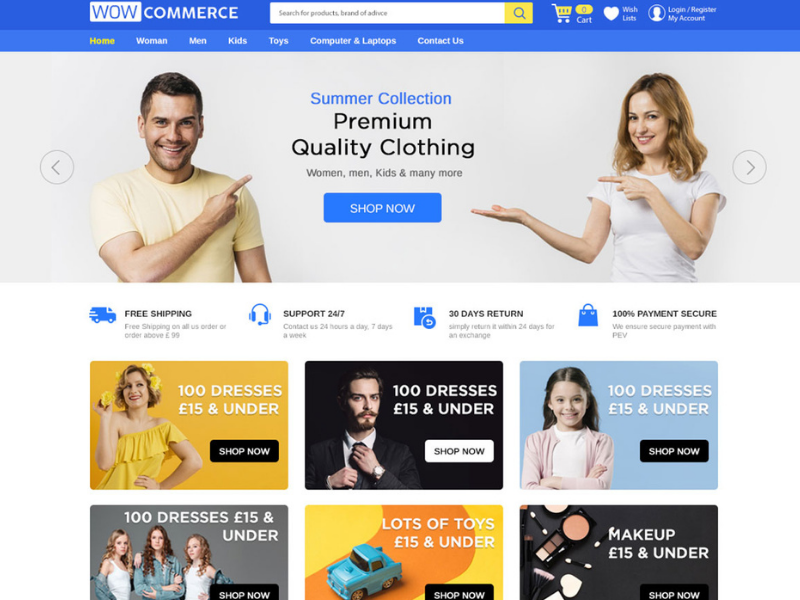
Now that you have an overall view of what your website needs to have, let's add a little more detail on how to create a user-friendly eCommerce solution and you are good to go.
Let’s get straight to the point.
What’s your consumer is looking for when he searches for an online store?
What is going to make you stand out from others?
What do you need to do in order to have a good business?
All of these questions will be answered thoroughly in this chapter along with some useful bonus tips for our lovely readers but only if you keep reading!
Not a bad deal, eh?
Setting up an online store for dummies
Anyone can go on and spend some quid to get a website by using some eCommerce templates or getting bespoke solutions.
Is this going to get them a successful eCommerce start? Nay Nay
Setting up an online store is more than just an eCommerce website development gismo. It involves multiple processes such as a roadmap to design your own eCommerce website, having a business plan to incorporate into your eCommerce website, and a marketing strategy with some practical call to actions steps.
Here is a list of eCommerce essentials that you need to have on your website.
Make a great first impression
Your goal is to make visitors your potential clients. What you got to do?
Make them stay.
For this purpose, you need to build a great first impression of your business, so when a user clicks on your website, he or she is intrigued enough to explore more.
For this, you need to make sure that you are offering
• An amusing eCommerce website design
• A professional-looking user-friendly interface
• A series of successful case studies
• Smart use of HD images and videos
• Easy navigation to assist users
• A section of the FAQ to boost confidence
• A clever procedure of wish list
• Efficient customer care to build trust
• A mobile responsive design to ease the experience
Keep them engaged
You made them stay, great!
Now work on keeping them interested in your business by offering;
• A non-cluttered design
• Ease in shopping with dynamic filters and detailed product categories
• Product reviews to form trust
• Smartly put related items category to keep them involved
• Give them a fast-loading site to browse
• Clear product details for understanding
• A number of product images
• Multiple payment gateways
• Smooth checkout process
Give them a reason to comeback
They came, they saw, they shopped! Good enough. Now, your next job is to make them regular customers.
How? We got you covered;
• Provide them with a personalised shopping experience
• Strong business policies to make them trust you
• Flexible refund policy
• Thorough shipping options
• Offer advance payment
• Great security features
• Offer special discounts for regulars
• Engage on social platforms
Offer them everything they are looking for and also something extra.
Chapter 9: Marketing is the name of the game
.jpg)
It all boils down to this; marketing, marketing, and good marketing!
If you want to sell online, you need to market your eCommerce solution strategically. This involves several steps for eCommerce marketing and a list of brand awareness techniques to achieve desired results.
...what’s the Goal? Sales!
and there are hundreds of ways to achieve this, but here we will share the best of the best to get you closer to this goal. Let’s begin!
There are two major means to move forward with your marketing strategies. One channel involves paid ads; the other is SEO techniques. Both have their prerequisite and work in certain situations, so we will discuss them below and leave it up to you to choose one or both for your business, given your specific needs.
Paid marketing
It involves different means of advertisements by paying a certain amount. It is used to achieve fast results in a limited time. There are several ways to achieve this;
1- Social media ads
To market your artefact on social media, you can pay them to run your ads. This includes Facebook, Twitter, Instagram, and other social media platforms. This effective use of advertisement can really up your game if coupled with another strong advertisement plan since social media is a huge platform for marketing.
2- PPC
This is another strategy to get traffic for your eCommerce website. You simply post ads and pay the publisher when you get clicks in return. This might cost you some but it sure does provide you quick results.
3- Affiliate marketing
This is a sort of marketing where you get other websites and blogs to advertise your products via different means and then you repay them after your every successful sale. They get a share in your profit and you get marketing!
4- Social media for eCommerce marketing
You pay bloggers and other influencers to market your product to their vast audience. This may lead to increased engagement in your website and thus gets you more sales. Today, with the ever-growing use of social media by the masses, the paid advertisement via social media influencers is really an effective tool of eCommerce marketing.
Organic marketing
The second method to market your eCommerce business is to work on bringing organic traffic to your website gradually. This category of marketing is based on long-term strategy and brand development. Some ways to achieve organic traffic are given below;
1- SEO
SEO is search engine optimisation which is based on inserting useful keywords into your web content. If you want to sell online, then the best way to achieve this is by creating relevant blog content for your business.
2- Third-party blogging
This helps you generate traffic to your eCommerce website from posting content on third-party platforms. These blogs provide you with organic traffic.
Offer consumers something they can’t refuse
The trick to eCommerce marketing is getting your prospective clients curious enough to explore you and then keeping them interested to an extent that they end up becoming a consumer.
For this, you need to cater to your audience on multiple forums with a variety of tactics.
You need to devise a comprehensive marketing plan for your product and for that, you should be sure about where your business stand. Ask yourself some questions,
What makes your product Unique?
What you have to Offer?
Can you justify your product Price?
Do you see your potential clients in the Market?
How will you get the Reach?
Can your product sustain the market Pressure?
Once you get to understand your product and marketing mechanics fully, you can most certainly start promoting it with full effect.
With good social media comes great marketing
If you want to sell online, you need to be seen online.
For eCommerce marketing, you need to use social media aptly. You should maintain your presence on famous platforms such as; Facebook, Twitter, Instagram, Linked In, and Pinterest, etc.
Get a marketing team for eCommerce services and social media management.
The trick is, to make it interesting. Use your social media smartly by engaging your visitors and keep them updated regarding your upcoming projects.
But don’t overdo it, use these platforms for SEO eCommerce and also share some interesting stuff on trending topics.
This will add a personal element to your brand.
Some tips to use social media proficiently;
• Facebook Stores will help you gain more prospective customers and a higher number of sales. You can also use it to promote your eCommerce solutions.
• Email promotions will do the trick for you. Use it systematically, and engage with visitors. Send them reminder emails about a new product launch, and ask them what they did and did not like about their shopping experience.
• Instagram Deals are a big window for your business endeavours and give you an opportunity to enhance sales.
You can use your social media for eCommerce digital marketing.
• TikTok Shop Now It's time to turn TikTok into a sales machine, craft eye-catching videos that tap into trending sounds, hashtags, and challenges to grab viewers' attention. Partner with influencers to showcase your products authentically and reach their established audience. Finally, take advantage of TikTok Shopping features to seamlessly link viewers directly to your products for an effortless purchase journey.
Optimise your site for SEO
Search Engine Optimisation is a game-changer for eCommerce marketing!!
Why SEO for an online business?
• Ecommerce organic reach
• Increased engagement
• Cost-effective
• Long-term eCommerce marketing
• Boost the organic presence
There are a dozen more reasons to go for search engine marketing and you can hire any eCommerce marketing agency to do the job for you.
Here is a number of campaign strategies for eCommerce that you can further work with to amplify brand awareness;
1. Smart use of keywords
2. Publish as much fresh content as you can
3. Write quality content
4. Use internal linking
5. Add external links in the right places
6. Use geo-location
7. Add optimised images
8. Embrace content marketing
9. Use guest post
10. Social media ads
Readmore: The World of Ecommerce Marketing
Conclusion
“The sooner we drop the ‘e’ out of ‘e-commerce’ and just call it commerce, the better.”
– Bob Willett, eBay
The eCommerce industry is going through exciting times and the future is bright. The question right now is not of whether to have an online store or not, the actual prizefight is “How to compete with others” after getting online as soon as possible.
The tale of building an online business is as old as the internet. The means to do business has been changing ever since, but entrepreneurs will never go out of business; given they adapt to the changes in consumers’ needs and perform their best.
Having said that, it is a fact that the eCommerce industry is booming right now and there is no doubt that it will reach new heights in the coming times
This blog has provided you with all the necessary information you need to have for building an online store from scratch, to the marketing strategies you need to implement for higher sales. All you need is to come up with an apt solution for consumer’s needs, and you have a trick up your sleeve!
For this, you need your base to be strong enough.
You can choose to have a bespoke solution or SaaS platform depending on your requirement since both have different dynamics; economically and development wise.
Go for a good b2c or b2b eCommerce platform to offer an eCommerce solution to your customers that is up to the mark and its game on!
About the Author: Daniel Sebastian

With diverse experience, Daniel Sebastian excels in crafting compelling narratives tailored for online start-ups. His expertise lies in distilling complex ideas into engaging content and guiding emerging businesses throughout the journey of establishing a solid and resonant online presence. Visit Facebook page to get in touch with him and keep abreast of emerging e-commerce trend